
Learning Nahw (Arabic grammar) and Sarf (morphology) can sometimes be challenging for students, particularly when the subjects are taught primarily through rules, definitions and theoretical explanations, without sufficient practical application.
One of the most important things to remember when teaching these subjects is that Tatbiq (application) should not be left until the end of a course. It should be incorporated into lessons from the very beginning.
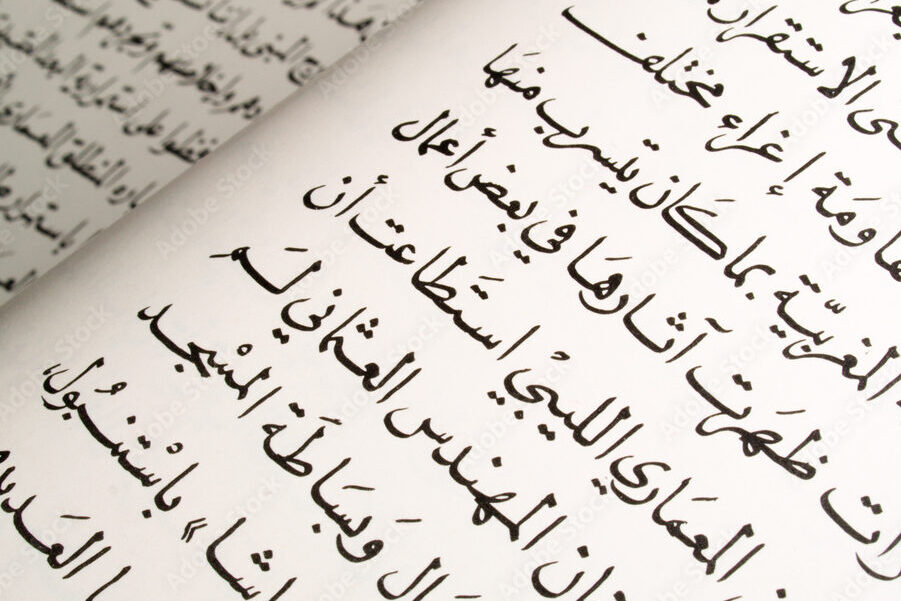
In fact, one of the best ways to teach Arabic is to bring actual Arabic literature into the classroom from the early stages. Students should not have to wait until they have completed an entire Nahw or Sarf syllabus before being exposed to Arabic texts.
There are several excellent books that can be used for this purpose, such as Qisas al-Nabiyyin, Al-Qira’ah al-Rashidah, Suwar min Hayat al-Sahabah and others. These provide valuable material for reading, comprehension, vocabulary building and grammatical application.
Generally, the works of Shaykh Abul Hasan Ali al-Nadwi (RA) are particularly beneficial for students. They offer excellent opportunities to develop reading skills, become familiar with Arabic expressions and gradually improve one’s command of the language. Similarly, the works of Shaykh Abdul Fattah Abu Ghuddah, alongside other classical and contemporary Arabic literature, can be used to broaden students’ exposure to the language.
Making Application Part of Every Lesson
Teaching Nahw and Sarf should not become a purely theoretical exercise in which the teacher explains a rule, gives a definition, writes a few examples on the board and moves on to the next chapter. Although explaining the rules and establishing a strong foundation are essential, students also need opportunities to engage with the language itself.
A teacher can select a short passage from one of the aforementioned books and incorporate it into the lesson. Alternatively, examples can be taken from the Qur’an, Hadith, classical Arabic literature or even the Diwans (collections of Arabic poetry).
The exercises should be relevant to whatever the students are currently studying. For example, when teaching a particular chapter of Nahw, ask students to identify the grammatical position of certain words, explain why they are Marfu’, Mansub or Majrur, identify the governing ’Amil and recognise the grammatical constructions they have learnt.
Similarly, when teaching Sarf, students should not simply memorise the different Awzan and conjugations. They should be shown how these patterns appear in actual Arabic texts, how the meanings change with different forms, and how to identify the root letters and Wazan of unfamiliar words.
The teacher shouldn’t translate every passage or explain every word. Give students the opportunity to work things out themselves. Allow them to consult their dictionaries, refer to their textbooks and attempt the analysis independently. The teacher can then guide them, correct their mistakes and explain anything they have struggled with.
It is also beneficial to vary the exercises. Rather than always explaining the I’rab of a sentence, occasionally give students a passage and ask them to analyse it themselves. Ask them why a particular word has been used, how it relates to the words around it and how the meaning might change if the construction were different.
Even a few lines of Arabic poetry, a passage from Hadith or a short Qur’anic verse can provide an excellent exercise.
This approach also helps maintain students’ interest and prevents lessons from becoming monotonous. Encourage questions, invite students to explain their reasoning and allow them to make mistakes as part of the learning process. The aim is not simply to provide them with the correct answers, but to develop their ability to arrive at those answers themselves.
It is important for students to understand how the principles they study in Nahw and Sarf are reflected in the words of Allah. When studying Tafsir, for example, knowing the I’rab of a verse can open up a deeper understanding of its meaning. The grammatical position of a word, its relationship with the words around it and the particular construction used can all have a bearing on the interpretation.
Students should therefore be encouraged not simply to read a translation or memorise an explanation of a verse, but to appreciate its Arabic structure.
For this purpose, there are several valuable books specifically dedicated to the I’rab of the Qur’an. These are excellent references for both teachers and students, particularly when carrying out practical exercises.
Recommended Books on the I’rab of the Qur’an
1. Al-Tibyan fi I’rab al-Qur’an by Imam Abul Baqa al-Ukbari
A relatively concise and valuable work covering the grammatical analysis of Qur’anic verses.
2. Al-Durr al-Masun fi Ulum al-Kitab al-Maknun by Imam al-Samin al-Halabi
A much more extensive and detailed work. It discusses grammatical, linguistic and other aspects of the Qur’anic text and is particularly beneficial for those wishing to explore the finer details of Qur’anic I’rab.
3. Al-Jadwal fi I’rab al-Qur’an by Mahmud Saafi.
A comprehensive work covering the entire Qur’an, with the grammatical analysis arranged in a clear, tabular format. It is a useful reference when looking up the I’rab of particular verses.
4. Al-Tafsil fi I’rab Ayat al-Tanzil by Abdul Latif al-Khatib, Sa’d Masluh and Rajab al-Alush.
A detailed work offering an extensive grammatical analysis of Qur’anic verses. It is particularly useful for students and teachers looking for a more in-depth discussion.
These books can be used alongside the regular study of Nahw and Sarf. For example, after completing a particular chapter in Nahw, a teacher can select relevant Qur’anic verses and ask students to identify the rules they have studied. They can then consult these works to compare their analysis, understand the reasoning and learn from the explanations of the scholars.
We should aim to develop students who can actually work with the Arabic language, not merely students who can recall grammatical definitions and reproduce rules in an examination.
Memorisation has its importance, and a strong foundation in the rules of Nahw and Sarf is essential. However, that knowledge needs to be strengthened through constant application, revision and exposure to different forms of Arabic literature.
As students progress, gradually increase the level of difficulty. Begin with short and straightforward sentences, then move towards Qur’anic verses, Hadith, poetry and classical Arabic texts. Encourage students to attempt the analysis independently rather than immediately turning to a book or asking the teacher for the answer.
Not every student will be at the same level, so the exercises should be adjusted accordingly. Some may be ready to analyse longer passages, whilst others may benefit from a few sentences at a time. Gradually increase the difficulty as their understanding develops.
Most importantly, make application a regular part of teaching rather than something that happens occasionally.
The objective is to develop students who, when they come across an Arabic passage, can understand its construction, recognise its grammatical features and analyse it with confidence.
Ultimately, Nahw and Sarf should not remain theoretical knowledge on the pages of a textbook. They should become practical tools through which a student develops a genuine understanding of the Arabic language and, in particular, the Qur’an.
We want students to reach a stage where they can open an Arabic book, read independently, understand what they are reading and apply the principles they have learnt without constantly relying on their teacher or a translation.
We have also shared some of these books on Quba Telegram channel. Do have a look and make use of the resources available there.
https://t.me/QubaAcademy

